
There are many people who for one reason or another have to delay surgery after an injury by several weeks or months. There is nothing quite like surgery to knock you down. It’s important to go into surgery feeling as strong as you can. This will minimize the amount of strength and motion you lose post operatively. This post will specifically discuss general recommendations for preparation for knee surgery.
In your preparation for knee surgery, optimize your knee’s range of motion.
After surgery there is usually swelling, bruising, and pain. This will limit your ability to bend and straighten your knee. Your surgeon and your physical therapist will let you know the safe range of motion for your knee immediately following your surgery. Leading up for your surgery, aim to have your knee go all the way straight, and bend past 90 degrees

Not everyone will be able to get this much knee flexion. It depends heavily on the amount of damage and swelling in your knee, as well as how long your knee has been stiff for. For example, someone who recently tore their ACL is more likely to obtain knee flexion than someone awaiting a knee replacement whose knee hasn’t bent much in over 10 years.
Some stretches you can try for knee range of motion include:
- Long sitting hamstring stretch with a rolled up towel or pillow under your ankle (leaving the back of your knee unsupported)
- Knee flexion wall slides
- Seated heel slides in a chair (using your “good” leg to pull your “bad” leg towards you, sliding your feet on the floor while sitting in a chair)
While you’re working on your motion, you will want to safely improve your quad strength.
The ability to perform quad strengthening will vary greatly depending on your injury. If you aren’t able to walk, start with some quad sets. This involves sitting with your legs in front of you, engaging your quadriceps muscles, and holding that contraction for 5-10 seconds. I suggest setting a timer for 10 minutes and just contract and relax your quad the entire time (5 – 10 seconds contracting, 5 seconds relaxing).
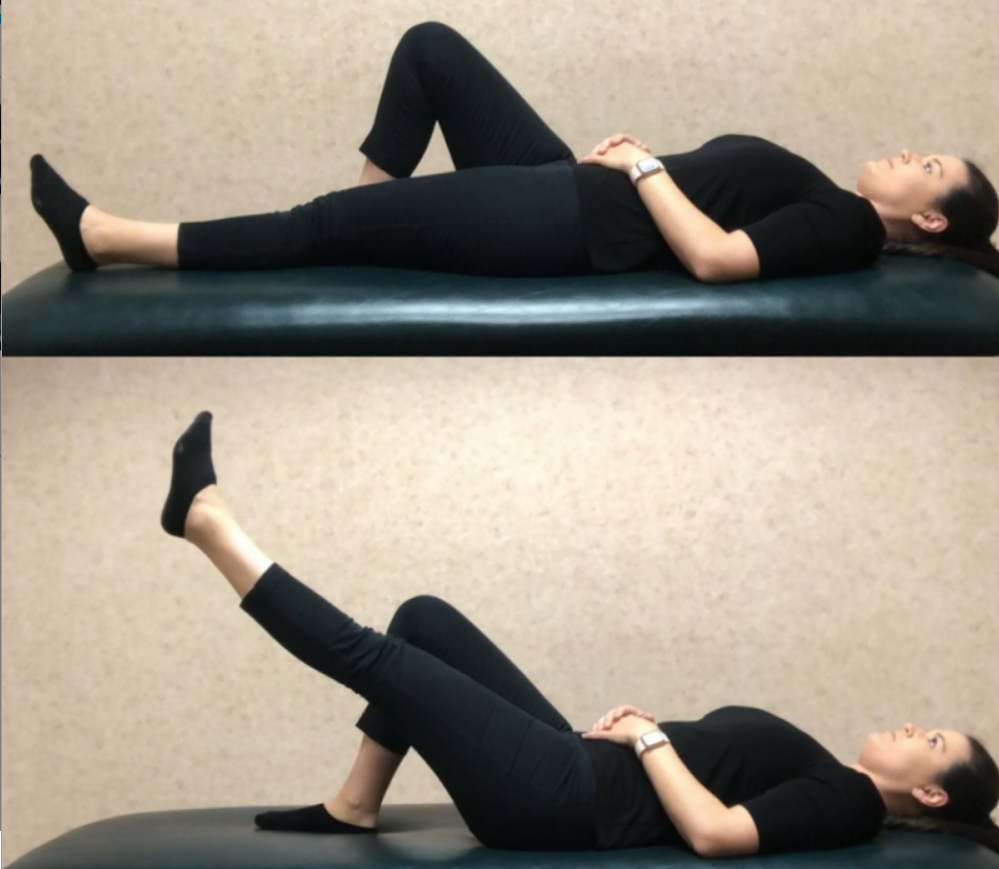
Once your quad has “woken up”, try a straight leg raise. Lay on your back, engage your quads so that your knee is straight, and raise your leg into the air. The goal is to keep your knee completely straight while you raise and lower it.
If you are able to walk without crutches or support, these exercises may be too easy for you. Find an exercise that is non-painful where you can load your hips and your quads. Some exercises may include:
- Leg press machine
- Squats
- Sit to stands
- Long arc quads
Lastly, preparation for knee surgery should include balance work.
If you are able to walk, now would be a good time to work on your balance. Following knee surgery, the body has some interruption of its balance through the surgical extremity. This will be reduced if your balance is good going in. Here are a few things you can try:
- Tandem balance (the foot in the back works harder)
- Tandem balance with head turns
- Single leg balance
- Single leg balance on an unstable surface (like a foam pad, or pillow)
- Single leg balance with head turns
If you are not able to put weight on your leg without crutches, then you will not be able to work on balance. So please do not attempt this if you are in this group.
Every knee injury is different, so please keep this in mind during your surgical prehab.
This post contains very general recommendations which should be tailored to an individual’s unique needs. Even two people with the same injury can look slightly different. This is because the amount of several factors including: amount of swelling, pre-injury muscle strength, and type of damage (ie: transverse meniscus tear vs. meniscal root tear).
I strongly recommend seeing a physical therapist for your prehab in order to ensure a routine that is appropriately tailored to your needs. However, if this is something you don’t have access to then this post is a good place to start.
Leave a Reply