
It’s very common to slip into a forward hunched posture if you work at a desk all day. Here are three exercises to perform for posture improvement.
Stretch your pecs – this can help keep you out of a slouched posture
The pec muscles, pectoralis minor and major, adduct your shoulder. This means they bring your arm from out to your side to across your body. Sitting at a desk can cause a rounded shoulder posture, which exacerbates pec tightness. Here are a few ways to stretch your pecs (just doing one of them is sufficient, but doing both is fine if desired):
- Foam roller snow angels: Lay with a foam roller along your spine. Slowly make a snow angel with your arms. When you feel a stretch across your chest/in the front of your shoulder, hang out in the stretch for 30 seconds. Rest briefly. Repeat 2-3 times. If a foam roller is too intense, you can use a rolled up towel.

2. Doorway pec stretch :Place your hands on each side of a doorway. Step forward into the doorway until you feel a stretch across your chest. Hold for 30 seconds, 2-3 times. I like that this stretch is easier to build into your work day than the above stretch.

To maintain any stretches you do, you have to strengthen the muscles that keep you there.
To keep the front of your shoulder from tightening back up, you need to strengthen your scapulae (shoulder blades). The scapula is the foundation of the shoulder and its position determines the position of the rest of the shoulder. Aside from keeping your pecs loose, scapular work helps reduce postural aggravation of neck pain! Here’s what to do:
- Step one: Scapular squeeze: Tuck your shoulder blades down and in. Don’t roll them up first – just squeeze them straight down. (video linked)
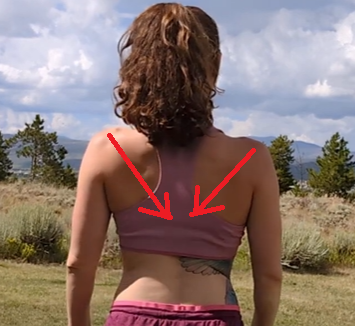
- Shoulder external rotation: Perform the scap squeeze described above. Then, holding a taut band, rotate your hands away from your body. Slowly return to start. Keep your elbows at your sides. Try 10-15 of these, for 3 rounds 2-3 times a week. (video linked)

Strengthen lower trapezius: A key muscle in posture and shoulder positioning
Lower trapezius is the muscle that brings your shoulder blades down and together during a scap squeeze (described above). It helps pulls the shoulder back and keeps it out of a rounded shoulder posture. This muscle is also a key component of preventing shoulder impingement.
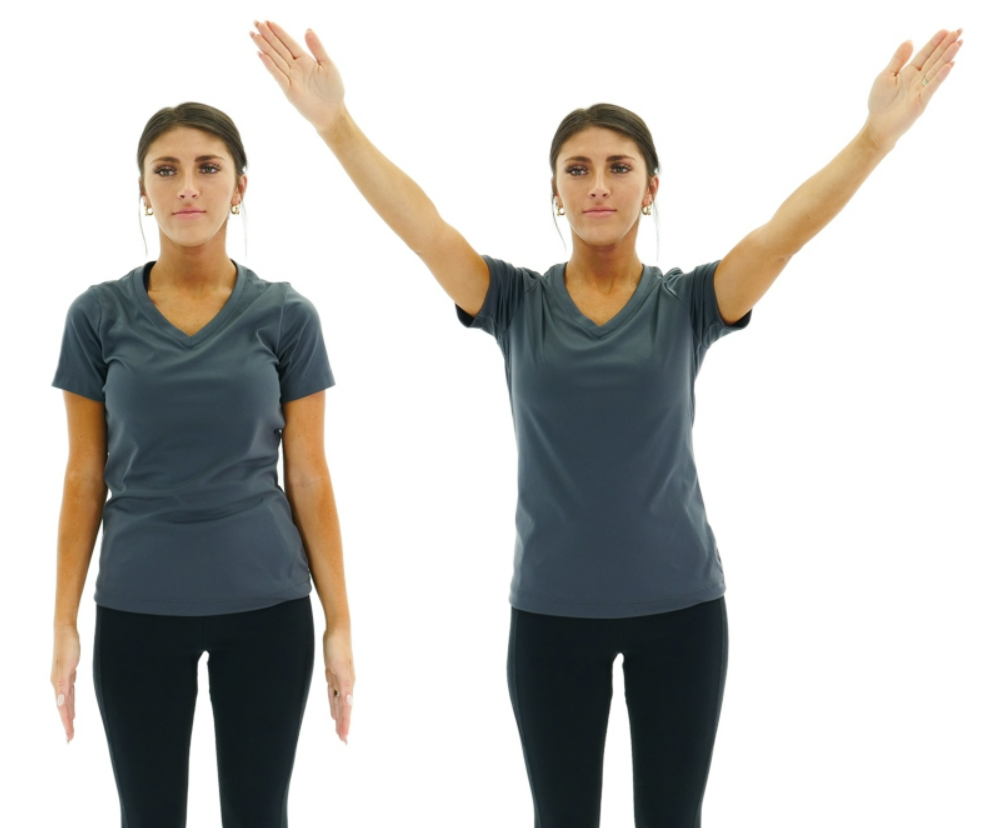
- Standing “Y”: Sitting up straight (or you can do this in standing), perform a scap squeeze and bring your arms up, making a “y”. Keep your arms slightly in front of your body at the start, then bring up and out. Do this by bringing your arms across the front of your body in a diagonal fashion as opposed to from the sides of your body like a snow angel. Don’t allow your shoulders to shrug during any part of the movement. Try to perform 10-12 of these. If they’re too easy, you can perform this holding a dumbbell.
Leave a Reply