
Often times when people have low back pain – one of the leading causes of disability in the US today – they will get a lumbar MRI (“Lumbar” is simply the term for your low back). There are a LOT of things I wish all patients knew before getting an MRI of their lumbar spine. In this post I’ll try to cover most of them with you.
Please note, this is for a patient with non-traumatic back pain. Think: “I bent over and my back seized up” or “my back gets sore by the end of the day” type of condition. If someone has had an obvious trauma like a car accident, ski injury, etc. that is a WHOLE ‘nother post! So please keep that in mind.
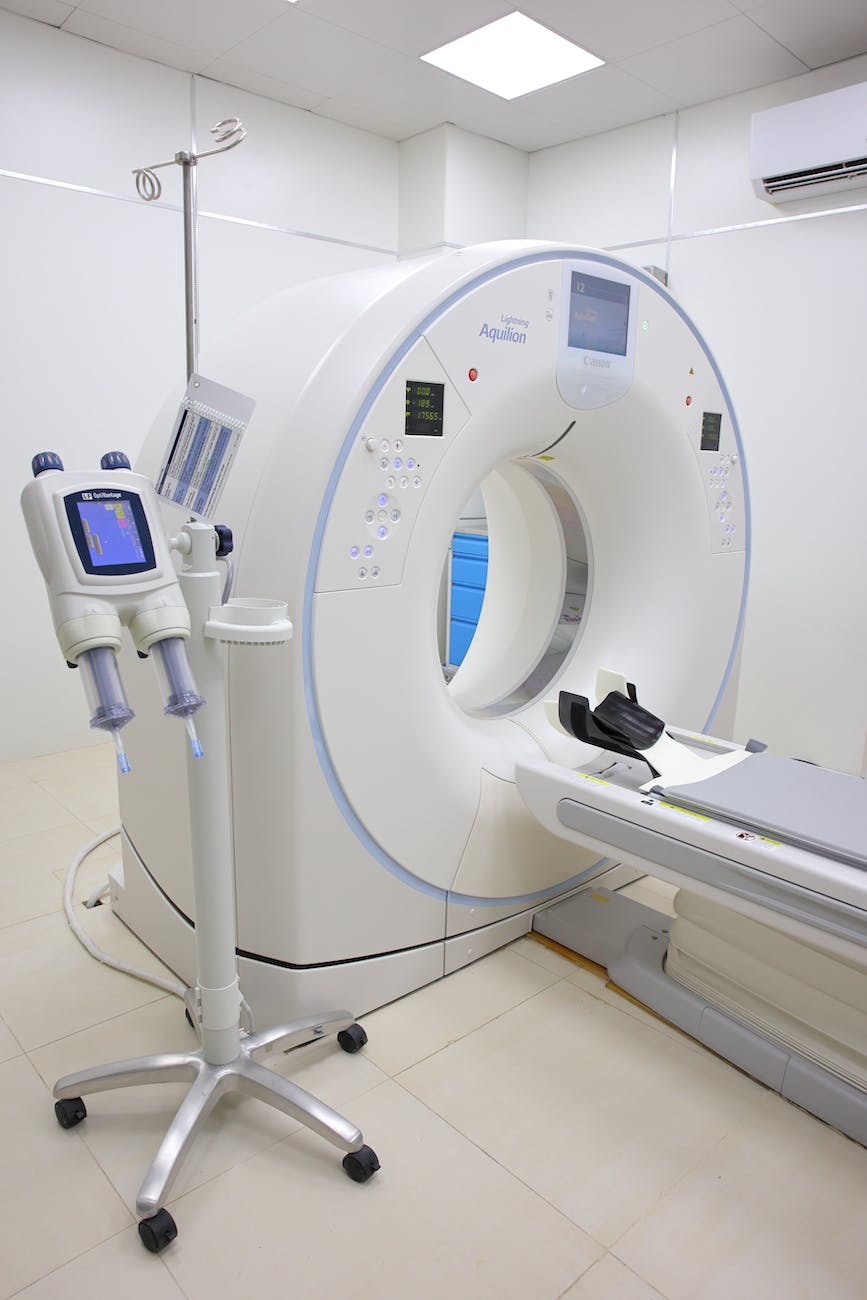
Image is a tiny piece of the puzzle and may or may not matter.
Yes, you read that correctly. The findings in your MRI may not matter. In fact, I want to say that almost half the time – they DON’T.
But Daniela – you may think – how is that possible? Why bother with a lumbar MRI?
I’ll start with how this is possible. Sometimes a lumbar MRI will show something like a disc herniation, which usually does not matter. Many people have a mild disc protrusion and do not have any symptoms. Others have a disc protrusion and do have symptoms. Two people with the same MRI often come into the clinic looking very different from each other. One person may be hobbling over, barely able to walk and move. The other may be a competitive cyclist who gets some soreness at the end of their ride. Yes, I have seen these exact scenarios. When I am working with a patient I treat the person I see in front of me, not what I see on the MRI. More on that in a bit.
This is a HUGE reason why I urge people to stay AWAY from google. If you google “disc herniation” you will see information ranging from mild to major herniations that are all grouped into one block of information. This is really inaccurate. This also doesn’t address the fact that disc herniations often self resolve.

Now, if there is a fracture such as a pars – this is very informative! We will know the movements to avoid – TEMPORARILY – and can work on non-painful safe strengthening and promoting improved movement patterns in the meantime.
Please don’t read your lumbar MRI without your provider’s insights
I know, I know, I know. It will be SO tempting. If you do decide to read it, read it knowing that you don’t understand any of the terms. You may see some words like “herniation” or “stenosis” or “thecal sac”. I have seen some people with a lot of findings in their lumbar MRI’s who are totally fine. I’ve also seen people who have the TINIEST finding, which probably isn’t driving their pain, come in with a lot of pain.
So please, wait to see what your provider has to say. Googling these terms out of context will only freak you out unnecessarily.
I have a personal friend who had a very mild disc herniation and unfortunately became obsessed with this. As a clinician when I saw the image I literally said, “oh, that’s all?” But to her, not understanding what she was seeing, it seemed like a very big deal and very scary. She became afraid of movement suddenly believing that her back was fragile. This caused her to move less, which made her more stiff, which gave her more pain. Not a good cycle to be in, and all because of a misunderstanding.
Getting an MRI for low back pain is not always helpful, because the findings may not be the cause of your pain.
A lot of times I see the way people move – they bend over and lift through their waist instead of their hips. Or they have zero glute strength. Or they have really tight hips. Nine times out of ten, THESE are the pain drivers. Think about it – if every time you bend forward to reach for something you do it incorrectly without knowing, eventually it’s going to start to hurt when you do it.
Sometimes, people have these poor movement patterns (or tight surrounding musculature) and they also happen to have something show up on their imaging. This can make us think that something in their spine is the pain driver when it actually is not. Again, the image is just a tiny piece of the puzzle. If we fixate on the image, we miss the bigger picture.
An MRI rules out “sinister” causes of low back pain
Sometimes, people do have something ‘else’ causing their pain. Sometimes people have cancer, a structural issue, or some type of disease causing their issues. I hesitate to write this because now everyone with back pain who reads this is going to think they might have cancer.
Relax, take a deep breath. You probably don’t. People who have these additional findings (let’s just stick with cancer because that’s an easy example) don’t respond to physical therapy. This is because it’s not their movement that is causing the problem.
Imaging, like MRI/CT scan, can be helpful in making sure we didn’t miss something bigger that is going on. Sometimes it’s not as helpful in diagnosing cause of pain, but it’s helpful in making sure we haven’t missed something bigger.
Every once in a while I work with a patient and notice they aren’t responding to therapy the way I feel they should be. This results in a discussion with their physician for further workup. This is always a process, as we can’t always tell from an image alone if someone will respond to physical therapy.
If you suddenly bent over and “threw out your back,” then it’s probably best to avoid an MRI for now.
Wait, what? Avoid an MRI? But don’t I need one? What if a disc bulged in my back at that exact point in time?!
Ok, so, slow your roll here. I promise, that is not how discs work. IF there is a bulge, it happens VERY gradually over time and has to move multiple layers and really is not concerning. This is usually normal wear and tear.
If you bent forward and suddenly had horrible pain in your back, 99% of the time I see this it’s because of your form. Nine times out of ten you bent forward without engaging your glutes, and if you reached for something at an awkward angle it’s the perfect setup to make your muscles say, “NOPE!” and go into spasm. Some people even get a shooting pain down their leg (more on that in another post). All this is very treatable in the PT clinic.
This is a situation where it’s not a disc problem, it’s a motor pattern problem. When you move in a dysfunctional way, after a while it hurts!

Imaging just gives us a piece of the puzzle
Imaging is just a tiny piece of the puzzle. When I see a patient for back pain I of course read through their lumbar MRI’s if they had them done, but I don’t use them to guide treatment (except specific findings which matter a little more – but I do a full examination to see how much this is actually affecting my patient). I test your nerves to see what is actually irritated. I look at your strength, your balance, and the way your body moves. How stiff are the joints of your spine? How tight are your muscles? Did you sprain your ankle 10 years ago and this now affects your hip and low back positioning?
If someone has stenosis in their back, or a disc bulge, we can’t directly treat that. Focusing on that is not helpful.
Here is what I focus on when treating low back pain:
- Hands on treatment to decrease irritated tissues. Your MRI may highlight one segment, but touch reveals tenderness in a different region.
- Stretching muscles that interfere with how freely you move: Hips too tight and this affects how you walk? The MRI won’t show me that.
- Improving muscle activation in helpful regions where you are lacking. I will test you hands on in the clinic. Again, the MRI can’t show me if you have weak glutes or poor balance.
There is so, so, so much more to your back pain than just an image. So please keep than in mind and don’t get too caught up on your MRI findings, because your treatment will focus on so much more than that. I hope you found this post helpful. If you’re struggling with low back pain I offer virtual assessments. Click here to discuss your options.
3 responses to “Getting an MRI for Low Back Pain? What you should know”
-
[…] An MRI does not show if a muscle is tight, or if you are moving in a way that irritates your hip. I don’t recommend any imaging for piriformis pain except to rule out “sinister” issues. I typically only recommend this if : […]
-
[…] MRI reports will say “degenerative disc disease”. When used in the context of the lumbar […]
-
[…] You can also bring a CD, however some computers are not able to open the files. If you had an MRI or CT scan, bring the radiologist’s report of the findings. It’s not necessary to bring CD’s […]
3 responses to “Getting an MRI for Low Back Pain? What you should know”
-
[…] An MRI does not show if a muscle is tight, or if you are moving in a way that irritates your hip. I don’t recommend any imaging for piriformis pain except to rule out “sinister” issues. I typically only recommend this if : […]
-
[…] MRI reports will say “degenerative disc disease”. When used in the context of the lumbar […]
-
[…] You can also bring a CD, however some computers are not able to open the files. If you had an MRI or CT scan, bring the radiologist’s report of the findings. It’s not necessary to bring CD’s […]
Leave a Reply