
Do you have pain along the side of your hip? Pain in this region used to be called bursitis. We now know that bursitis is not the issue in chronic cases and the term is now greater trochanteric pain syndrome.
What is bursitis? Let’s start with what a bursa is.
Our joints have small pads inside of them that provide some cushioning (these pads are actually all over and not always literally inside the joint). These pads are fluid-filled sacs called bursa sacs. Bursitis occurs when something causes one of these sacs to burst. This is typically accompanied by swelling depending on the area, and may need to be drained (but sometimes resolves on its own).
Years ago, pain at the side of the hip was called bursitis. This implies that the pain is from a burst bursa. While this may be the case at times, this is not always the cause of pain. If there was pain from a burst bursa, it would be immediate and would not last for years. Most of the people with lateral hip pain (pain on the “outside” of the hip) have a gradual onset of pain. Sometimes pain may begin as bursitis but as time goes on other issues develop. However, not everyone’s lateral hip pain starts as bursitis.
Greater Trochanteric Pain Syndrome – What is it and what causes it?
Greater Trochanteric Pain Syndrome (GTPS) is named for the location of pain. The greater trochanter is a large bony prominence on the outside of the hip where many muscles attach.

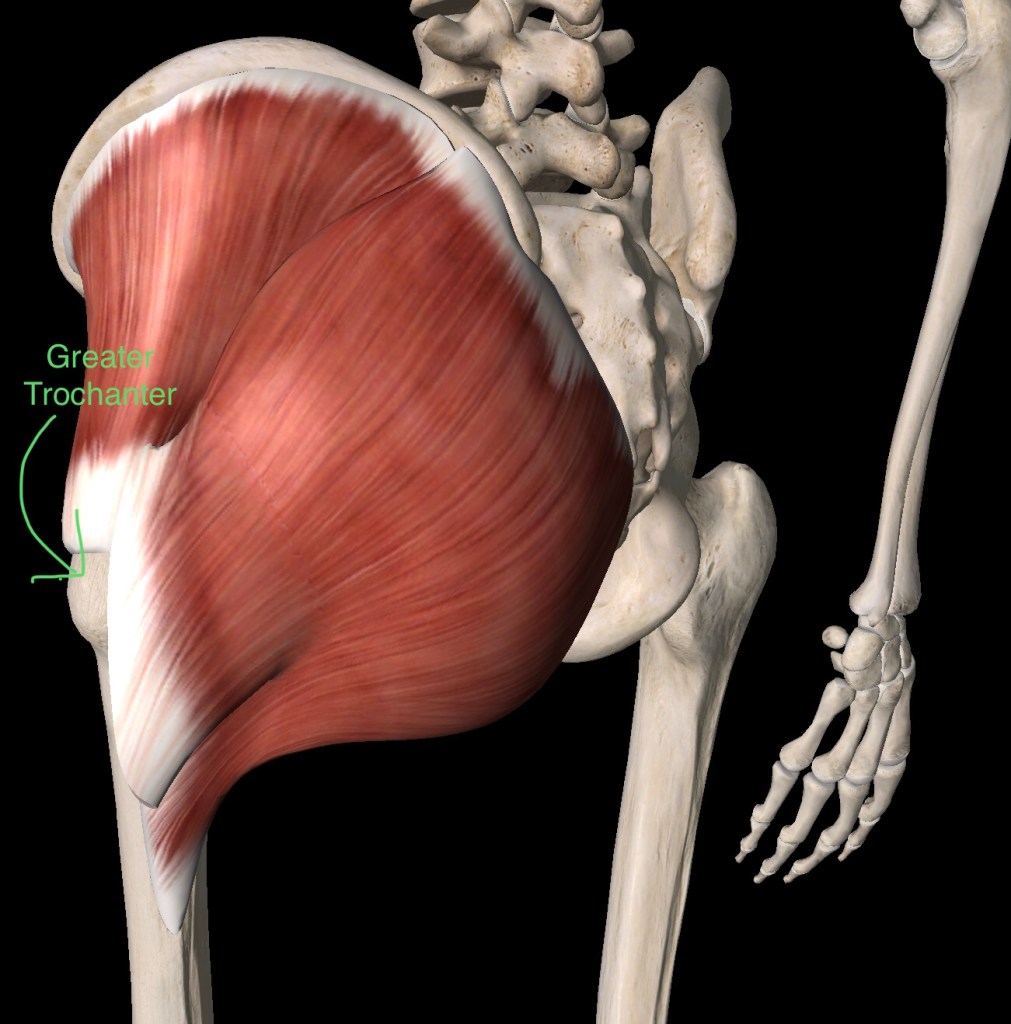
This is the area that is typically reported as painful. This area becomes painful because the muscles that attach to the greater trochanter become weak. Weak muscles usually become sore and painful.
What are the symptoms of Greater Trochanteric Pain Syndrome?
The signs of greater trochanteric pain syndrome typically include:
- Pain with laying on the affected hip (sometimes pain laying on the other hip as well)
- Pain with hip flexion – things like walking or climbing stairs
- Pain with prolonged standing
- Pain with rotating the hip internally and externally (meaning using your hip to make your knee face either towards or away from your other leg)
- Pain standing on one leg (the affected side)
Treatment of GTPS typically includes gradual mobility, and strengthening of the hip muscles.
The approach that I’m about to describe is very general and will not apply to everyone. If you think you may have GTPS, please keep this in mind. Everyone’s bodies are slightly different and treatment is nuanced to fit an individual’s needs.
Common locations of muscle tightness may be the hip flexors and IT band. If these muscles are tight, try gently stretching them once or twice a day with 2-3 30 second holds. Only perform the stretches if you’re able to do them without increased pain.
A critical component of rehabilitation for GTPS is strengthening. With GTPS the abductors and external rotators of the hip are typically very weak. The hip abductors are muscles that pull your leg away from your body, and support you when you are standing on that leg alone. The external rotators turn your leg so that your knee is facing away from your other leg.
These movements are typically painful for someone with GTPS. The key is finding a starting point that works for you. This means finding a non-painful exercise. As your strength improves, you will slowly be able to do more and more.
Here are some movements you can try:
- Standing and slowly rotating your hip in and out, in a pain-free range
- Isometric clamshell: Move into a clamshell and hold at the top of the movement for 10-15 seconds
- Shift weight through your hips onto your affected leg as though you are going to balance on it. Instead of balancing on your leg alone, slowly shift the weight back off of it. Continue shifting weight on and off, with the goal of eventually being able to stand on one leg without pain.
- Banded bridge: Tie a band around your knees, roll your pelvis off the ground as though you are lifting off one vertebrae at a time from bottom to top. Keep your knees hip width apart during the entire movement, with some tension on the band. Slowly lower back down, one vertebrae at a time.
If you have chronic GTPS, please avoid cortisone injections.
Over time, cortisone injections damage the tissues that need strength around the hip. This will provide temporary relief but is likely exacerbate the problem as time goes on. This is because the tissues surrounding the hip are already weak – damaging them with repeated cortisone injections will make it more difficult to strengthen these muscles. There may be other injectable options for pain management, however I only recommend using those alongside physical therapy. Again, this is because injections will mask the pain but will not treat the underlying cause of it.
It may feel like you always want to be massaged and stretched, but strength is the true treatment here. If you’re struggling with where to start, I suggest meeting with a physical therapist to get you going.
Leave a Reply